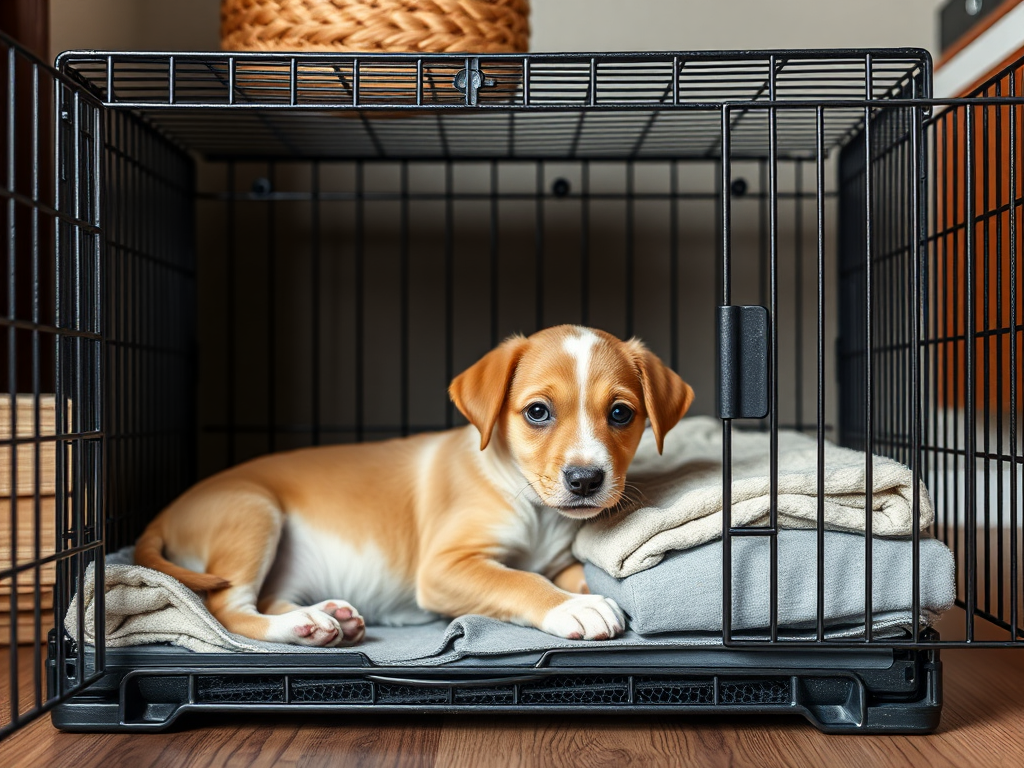
Your puppy may refuse to use the potty bell because the bell has not acquired a clear meaning, its sound or movement feels unpleasant, or ringing it has not reliably led to an immediate outdoor potty trip. Bell placement can also make the signal physically difficult, while inconsistent responses teach the puppy that touching it has little value. Rebuild the behavior by rewarding a gentle nose touch, placing the bell beside the exit at an accessible height, and opening the door promptly after every deliberate ring. Continue scheduled potty trips during practice, because a puppy should not be expected to signal before bladder control and house-training habits are dependable.
What the Potty Bell Means to Your Puppy
A potty bell has no natural connection to elimination. To a young dog, it begins as an unfamiliar object that swings, rattles, or hangs near a door. The puppy must learn a precise sequence: touching the bell makes a sound, the sound prompts the person to open the door, and going outside creates an opportunity to eliminate and earn a reward. If any part of that sequence is inconsistent, the bell remains background noise rather than a useful signal.
Owners sometimes assume that repeatedly ringing the bell before carrying a puppy outside will teach independent signaling. The puppy may instead notice only the actions that follow the sound: being picked up, seeing the leash, or watching the door open. Because the person—not the puppy—operates the bell, the puppy never learns that its own movement controls the outcome. A successful association requires the puppy to cause the ring deliberately, even if the first touches are prompted.
The consequence of ringing must also be specific. If a ring sometimes starts a walk, sometimes produces indoor play, and sometimes receives no response, it becomes an unreliable request for attention. A puppy may stop trying or ring repeatedly for entertainment. During early practice, a deliberate ring should lead promptly to a brief, quiet trip to the designated potty area. Play and neighborhood walks can happen separately so that the signal retains a narrow meaning.
Age and physical control impose another constraint. A puppy who notices a full bladder only moments before urinating may not have enough time to leave a room, reach the bell, ring it, and wait at the door. Scheduled outings after waking, eating, drinking, energetic play, and confinement remain necessary. Bell use is an added communication behavior, not a substitute for supervision or an age-appropriate toilet schedule.
Watch what happens immediately before accidents. A puppy who sniffs, circles, or leaves play but never approaches the door probably has not connected the urge with the bell sequence. A puppy who walks to the door and waits silently understands the destination but may not understand the required touch. Those are different problems: the first calls for stronger potty routines, while the second calls for focused bell-touch practice. This distinction is central to diagnosing why your puppy refuses to use the potty bell without blaming stubbornness.
Check for Sound, Placement, and Doorway Problems
The bell must be comfortable to approach and easy to operate. Metal bells can produce a sharp sound when they strike a hard door, and hanging straps may sway toward a puppy’s face. A sound-sensitive puppy may lean away, freeze, lick its lips, retreat, or touch the object once and then avoid the doorway. Forcing a paw into the bells can intensify that concern because it combines restraint, unstable footing, and sudden noise.
Test the puppy’s reaction at lower intensity. Hold the bell still several feet from the door, make a very soft sound, and offer a small food reward if the puppy remains relaxed. Gradually increase normal movement over several short sessions. If the puppy will approach a motionless bell but backs away when it rings, sound or swinging motion is the likely barrier. A softer single bell or a push-button device may be more suitable, provided its activation is gentle and its sound does not startle the dog.
Placement can produce failure even when the puppy is comfortable with the noise. A strap mounted above nose level may require jumping, while one touching the floor can become a chew toy. Position the active part near the puppy’s natural nose height, beside the door used for potty trips. Check that furniture, a baby gate, a slippery mat, or the opening door does not block access. For a very small puppy, verify that the bell does not swing back and strike the muzzle after contact.
The doorway itself may be the problem. A puppy that dislikes rain, traffic noise, cold surfaces, stairs, or a dark yard can learn that ringing predicts an unpleasant transition. In that situation, practicing harder at the bell does not resolve the outdoor concern. Improve traction, turn on an exterior light, accompany the puppy calmly, or use the safest accessible exit. Keep necessary trips matter-of-fact rather than dragging or scolding the puppy through the doorway.
Use this compact check before changing the training plan:
- Access: The puppy can reach the bell from its usual living area.
- Height: A nose touch works without jumping or pawing.
- Sound: The puppy stays loose and willing after the bell rings.
- Route: The floor, door, steps, and outdoor area are manageable.
- Response: A purposeful ring consistently opens the correct door.
Changing several variables at once makes the cause difficult to identify. Adjust the most likely physical obstacle first, observe several brief sessions, and then modify the next factor if avoidance continues.
Rebuild the Bell-to-Potty Connection
Rebuilding works best when bell touching is taught separately before it is attached to an urgent bathroom need. Begin when the puppy is awake, comfortable, and not desperate to eliminate. Present the bell close enough to investigate but far enough that it does not swing into the puppy. Mark a voluntary glance or lean with a calm verbal marker such as “yes,” then give a tiny reward. Raise the criterion to a nose touch once the puppy approaches confidently.
Do not wait for a perfect, loud ring. A gentle touch that produces slight movement is sufficient at first. Rewarding only forceful contact may encourage scratching at the door or frustrate a cautious puppy. Pawing can also snag nails in straps, so a nose target is generally easier to control. Keep each practice period to several successful repetitions and stop before the puppy begins biting the strap, wandering away, or offering frantic behaviors.
Next, mount the bell at the potty door and rehearse the complete chain. Guide the puppy to the bell, cue the learned touch once, open the door immediately after contact, and go directly to the usual toilet spot. Stand quietly and allow a reasonable opportunity to eliminate. Reward outdoors after the puppy finishes. If nothing happens, return indoors under close supervision and try the normal potty trip again soon; do not turn every unsuccessful ring into extended outdoor recreation.
A practical progression looks like this:
- Reward calm investigation and then a voluntary nose touch away from the door.
- Practice the same touch with the bell mounted beside the exit.
- Open the door immediately after the puppy activates it.
- Use the sequence before predictable scheduled potty trips.
- Pause briefly at the door so the puppy has a chance to ring without a prompt.
- Fade the verbal cue only after the puppy begins initiating the touch.
Consider a puppy that reliably urinates after waking. Instead of waiting for an accident-driven signal, bring the puppy to the bell as soon as the nap ends, prompt one touch, and proceed outside. The full bladder increases the likelihood of outdoor elimination, so the ring is followed by the exact outcome it should predict. Repeating the sequence at predictable times creates clearer learning than asking for random practice touches throughout the day.
Household consistency matters during this phase. If one person responds to a soft ring while another waits for vigorous pawing, the puppy receives conflicting criteria. Agree on what counts as an intentional signal and which door will be used. The detailed process in why your puppy refuses to use the potty bell should be applied without reducing scheduled outings, especially for puppies still having frequent indoor accidents.
Know Whether Bell Training Is Working
Progress appears first as cleaner participation, not immediate independent signaling. The puppy should approach without hesitation, touch with less prompting, and remain near the exit while the door opens. Later, the puppy may move toward the bell when it feels the urge to eliminate. Track whether rings are followed by prompt urination or defecation outdoors; that relationship is more informative than the total number of rings.
Attention-seeking rings are common once a puppy discovers that the bell controls access to the yard. They do not mean the training has failed. Respond with the established protocol: leash the puppy if needed, go to the toilet area, keep the outing quiet, and return indoors if no elimination occurs. Providing a long play session after every ring rewards recreational use. Refusing all later rings, however, can weaken legitimate signaling. A short potty-only response preserves the bell’s meaning without turning it into an all-purpose doorbell.
A failing plan usually produces avoidance, escalating prompting, indoor accidents despite available supervision, or repeated ringing followed by no attempt to eliminate. Avoidance suggests that the equipment or doorway remains uncomfortable. Escalating prompts indicate that the touch behavior is not fluent enough. Accidents may reflect an outing schedule that exceeds the puppy’s current bladder or bowel control, rather than a bell problem. Frequent empty trips can mean the puppy has learned to request outdoor access instead of communicating a toilet need.
Set a realistic decision point. If the puppy readily goes to the door but consistently avoids the device after careful sound desensitization, a quieter button, a stationary target, or another visible door signal may be a better fit. The goal is dependable communication, not loyalty to one tool. Some puppies also signal naturally by pacing, staring at the handler, or sitting at the exit. Owners can reinforce those behaviors instead of overlooking them while waiting for a ring.
Sudden loss of a previously reliable signal deserves separate attention. Increased urination, straining, loose stool, discomfort, unusual thirst, or abrupt accidents may indicate a health issue rather than forgotten training. Contact a veterinarian when elimination patterns change unexpectedly or the puppy appears unwell. Punishment is particularly unhelpful because it can suppress visible warning behaviors without addressing urgency or discomfort.
Keep a simple record for several days: scheduled outing times, bell contacts, outdoor results, accidents, and relevant events such as meals or naps. Patterns reveal whether the next priority is shorter intervals, better bell fluency, a less startling device, or professional veterinary input. For owners still sorting through why your puppy refuses to use the potty bell, observed behavior is more useful than assumptions about defiance.
Frequently Asked Questions
How long does it take a puppy to learn a potty bell?
Some puppies learn the touch quickly but need longer to connect it with bladder pressure and outdoor elimination. Judge progress by willing contact, fewer prompts, and rings that increasingly precede successful potty trips rather than by a fixed deadline.
Should I ring the bell for my puppy?
You may demonstrate it initially, but the puppy must learn to activate it. Prompt a nose touch before scheduled outings so the puppy's own action, rather than your ringing, becomes the signal that opens the door.
What should I do if my puppy is afraid of the bell?
Move it away from the doorway, prevent swinging, and pair very soft sounds with small rewards. Increase volume and movement gradually; use a quieter alternative if the puppy continues to retreat or freeze.
Why does my puppy ring the bell without going potty?
The puppy may have learned that ringing provides outdoor access. Offer a brief, boring trip to the toilet area and return inside if nothing happens, saving walks and play for separate outings.
Can potty bells replace a puppy's bathroom schedule?
No. Young puppies may recognize urgency too late to signal reliably. Continue proactive trips after sleep, food, water, play, and confinement while treating the bell as an additional communication option.
Conclusion
Evaluate the entire sequence before deciding that the puppy is unwilling to cooperate. Confirm that the bell is reachable and comfortable, teach a voluntary nose touch away from bathroom urgency, and make each deliberate activation lead promptly to a quiet visit to the designated potty area. Keep scheduled outings in place while the signal develops, because communication skills cannot compensate for immature bladder control.
Use several days of observations to choose the next step. Hesitation points toward sound, movement, or doorway discomfort; enthusiastic empty rings call for shorter potty-only responses; continued accidents call for closer supervision and more frequent outings. A puppy that remains uncomfortable with the bell can use a quieter button or a reinforced door-waiting signal instead. Seek veterinary advice when a previously reliable puppy changes elimination habits or shows physical symptoms.