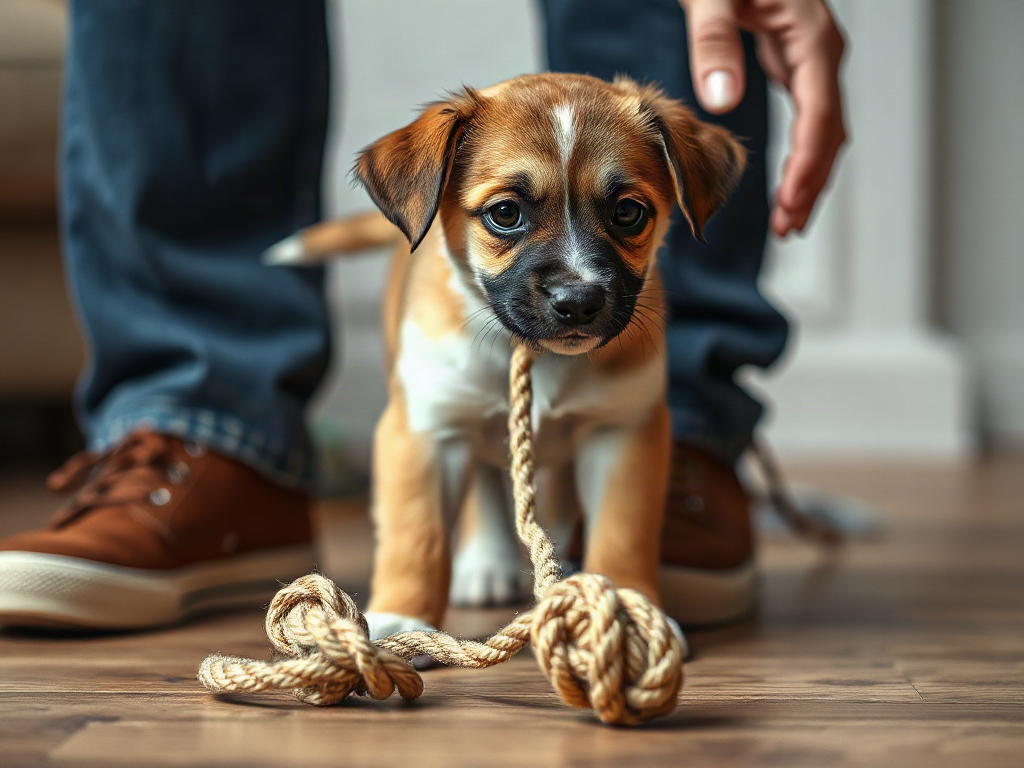
Quick Answer: No. Do not tap your puppy on the nose for biting, because a moving or unpleasant hand can increase excitement, create fear of handling, or provoke defensive behavior. Freeze, pause attention briefly, then reward calm behavior and redirect your puppy to a suitable toy or chew.
Why This Happens: Puppies commonly mouth while exploring, teething, playing, or coping with fatigue and overstimulation. Frequent evening biting often signals that a puppy needs less excitement and more rest, while stiff posture, guarding, pain-related reactions, or puncture bites may indicate a problem requiring professional help.
How To Fix It:
- Keep your hands still when teeth touch skin or clothing, and calmly end attention for a brief moment.
- Resume interaction only after calm behavior, then offer a suitable toy and praise the puppy for biting it instead.
- Track common triggers such as rough play, fatigue, petting, clothing movement, hunger, or insufficient toilet breaks.
- Give the puppy planned sleep, supervised chew options, short training sessions, and consistent rules across the household.
- Consult a veterinarian or qualified reward-based behavior professional for sudden, painful, defensive, guarding, or skin-breaking bites.
No, you should not tap your puppy on the nose when he bites. Even a light tap can make hands seem threatening, increase excitement, or turn biting into a more intense game. It also fails to show your puppy what to do instead. A better way to train a puppy not to bite is to calmly stop access to play, redirect the puppy to an appropriate toy, and reward gentle interaction.
Why nose tapping can make puppy biting worse
Puppies explore with their mouths. They also bite during play, while teething, and when they are tired or overstimulated. A hand moving quickly toward a puppy’s face may trigger another snap because the movement resembles play. If the tap is unpleasant, the puppy may instead begin to avoid hands, flinch during handling, or defend himself when someone reaches toward his head.
Physical correction does not clearly communicate the behavior you want. Your puppy may associate the tap with your hand, your approach, or the place where it happened rather than with biting. Some puppies become cautious; others become more excited and bite harder. Either outcome makes teaching calm mouth behavior more difficult.
Nose tapping is especially risky around children, who may copy the correction with poor timing or too much force. Children should not be responsible for physically correcting a puppy. An adult should supervise every interaction, interrupt rough play early, and give both the child and puppy space when either one becomes excited.
What to do at the moment your puppy bites
When teeth touch your skin or clothing, become still. Pulling your hand away rapidly can encourage chasing and grabbing. Use a brief, calm marker such as “too bad” if you want one, but avoid shouting, squealing, or repeating commands. Then end access to you for a short moment by standing up, turning away, or stepping behind a gate.
The consequence should be immediate and uncomplicated: biting makes attention and play pause. Resume only when your puppy has four paws down and is calm enough to make a better choice. If he bites again as soon as play restarts, end the interaction and guide him toward a quieter activity. Repeated biting often means the puppy cannot manage more play at that moment.
Redirect before teeth reach you
Keep a suitable toy within reach in the rooms where biting usually occurs. If your puppy approaches with an open mouth or begins targeting sleeves, present a tug toy, soft toy, or chew before he grabs you. Move the toy away from your body so your hands and clothing do not remain part of the game. Praise him when he puts his mouth on the toy.
Redirection works best before the puppy becomes frantic. Constantly pushing a toy into his mouth after every bite can accidentally create a pattern in which biting you starts the game. Pause attention first, wait for a moment of calm, and then offer the toy. For a broader practice plan, use these methods for teaching a puppy to play gently.
Use a brief reverse time-out
A reverse time-out means you leave rather than forcibly moving the puppy. Step over a gate or out of reach for roughly several seconds, then return calmly. This avoids grabbing a biting puppy by the collar, which can provoke more mouthing and may create negative feelings about collar handling.
The pause should not be frightening or prolonged. Do not chase the puppy, pin him down, hold his muzzle shut, or place him in a crate as punishment. The goal is simply to remove the rewarding social interaction. A crate or pen can still be used positively for planned rest, provided the puppy enters calmly and has appropriate comfort and supervision.
Teach the behavior you want instead
Training is more effective when the puppy has a clear alternative. Practice short sessions in which calm behavior earns attention. Offer your hand at a comfortable distance. If your puppy sniffs or looks without using teeth, mark that choice with “yes” and place a small treat on the floor. Delivering it away from your fingers can help prevent excited grabbing.
You can also reward sitting before play, carrying a toy when greeting people, and keeping four paws on the floor. If your puppy becomes mouthy when you sit on the sofa or walk across a room, arrange the situation so success is easier. Use a gate, lightweight supervised house line, or toy station rather than repeatedly pushing him away. The related skill of respecting personal space can help with puppies who climb, grab clothing, and demand contact.
Everyone in the household should respond in the same basic way: freeze, pause attention, and offer an appropriate alternative after calm behavior appears. If one person wrestles with bare hands while another punishes mouthing, the puppy receives conflicting information. Agree on which toys are available, which words you will use, and when play ends.
Practice gentle handling separately from active play. Briefly touch an ear, paw, shoulder, or collar, then provide a treat while your puppy remains comfortable. Stop before he struggles or mouths. This builds a positive association with hands and prepares him for grooming and veterinary care without using restraint as a correction.
Reduce the triggers behind frequent biting
Many biting episodes are management problems as much as training problems. Notice when and where they occur. A puppy who attacks trouser legs every evening may be overtired. One who mouths during petting may need shorter contact. A puppy who bites hands when a chew is removed may be worried about losing valuable items and should not be confronted or punished.
Provide age-appropriate sleep, regular toilet trips, food enrichment, chewing options, and short periods of physical and mental activity. Choose chews that suit your puppy’s size and chewing style, inspect them for damage, and supervise their use. Ask your veterinarian about safe options if you are uncertain, particularly for a very young puppy or one with dental or digestive concerns.
Avoid games that encourage your puppy to chase fingers, grab sleeves, or tackle feet. Tug can be appropriate when the puppy targets the toy, releases through a trained exchange, and takes breaks. End the game before arousal becomes frantic. Calm sniffing, simple food searches, and brief training repetitions can help a highly excited puppy settle without adding more fast movement.
Watch body language as well as teeth. Loose movement and brief, inhibited mouthing during play differ from a stiff posture, freezing, hard staring, guarding, or repeated bites intended to drive someone away. Fearful puppies need distance and a gradual plan rather than more correction. Guidance on helping a puppy feel secure during training may be useful when biting appears connected to uncertainty.
When biting needs professional attention
Contact your veterinarian if biting begins suddenly, happens when a particular body area is touched, or appears alongside limping, appetite changes, unusual sleep, digestive trouble, or other signs of discomfort. Pain and illness can lower a puppy’s tolerance. Do not test a painful area repeatedly or rely on training alone until a medical cause has been considered.
Seek qualified behavior help promptly when bites puncture skin, the puppy guards food or objects, biting is accompanied by stiff or threatening behavior, or family members are afraid. A reward-based trainer experienced with puppy biting may help with ordinary play mouthing. Cases involving aggression, intense fear, or a bite history may require a veterinary behaviorist or another appropriately qualified behavior professional working with your veterinarian.
Trainer and behavior-professional titles are not regulated consistently across jurisdictions, so a title alone may not establish competence. Ask candidates to explain their methods, education, experience with similar cases, safety plan, and referral relationship with veterinarians. Avoid anyone who recommends hitting, muzzle grabbing, forced rolling, intimidation, or provoking bites to establish control. Local laws and reporting requirements for serious bites vary, so contact the appropriate medical, veterinary, or local authority when a person has been injured.
If a bite breaks skin, separate the puppy safely and attend to the wound. Obtain medical advice based on the injury and the person’s health rather than trying to evaluate the risk through training guidance. While arranging help, use gates, pens, leashes under direct supervision, and predictable routines to prevent another incident. Management protects everyone and stops the puppy from rehearsing the behavior.
Replace correction with a repeatable plan
Do not tap your puppy’s nose. Each time mouthing begins, calmly remove attention, wait for composure, and reinforce contact with toys or other gentle behavior. Pair that response with enough rest, suitable chewing outlets, careful supervision, and consistent household rules. Ordinary puppy mouthing can be taught without frightening or physically correcting the puppy, while painful, defensive, or injurious biting deserves timely veterinary and professional assessment.
Popular Questions
Is it okay to yelp when my puppy’s teeth hurt me?
A soft sound may interrupt some puppies, but a high-pitched yelp excites others and causes harder biting. If your puppy becomes more animated, skip the sound. Keep your body still, calmly withdraw attention for a brief moment, and restart only after your puppy settles. Consistency matters more than making a dramatic noise.
Should I hold my puppy’s mouth closed after a bite?
No. Holding the muzzle can frighten the puppy, provoke struggling, and make hands near the face feel unsafe. It also does not teach an acceptable alternative. End the interaction without wrestling, then reinforce calm behavior and offer an appropriate toy. Practice gentle handling separately, using brief touches paired with rewards.
How can children respond safely to puppy mouthing?
Children should become still, protect their hands, and call an adult rather than pushing, hitting, or running. An adult should separate the puppy with a gate or other safe barrier and provide a calm activity. Supervise all contact closely, keep play structured, and stop before either the child or puppy becomes overexcited.
What signs suggest the biting is more than normal play mouthing?
Seek help when biting causes punctures, occurs with freezing, stiff posture, hard staring, guarding, or attempts to drive people away. Sudden biting during touch may also indicate pain. A veterinarian should assess possible medical causes, while a qualified reward-based behavior professional can create a safety and training plan for concerning behavior.