When walking your dog, it is important that your dog follows your lead and doesn’t drag you down the sidewalk. This article offers great information for any dog owner.
There are a few tricks you can try when attempting to crate train a puppy or dog. If your dog doesn’t want to enter the crate, put a chew bone inside the crate, then close to door. Your dog will want to get into the crate in order to eat the treat. Once they enter the crate, be sure to praise them to show that what they did was good.
You need to adhere to a specific feeding routine for your dog. Train your dog to understand that you are going to remove their food bowl upon fifteen minutes of feeding them. This will establish a feeding schedule for your dog. Your dog will quickly finish their meal before you remove their dish.
Dogs generally focus on one thing while ignoring everything around them, unless something interrupts that intense focus. If you keep up with his training, your dog will look to you more often for direction rather than looking to the environment.
When crate training a young puppy you must be consistent. Always give the pup the option to go to the bathroom after leaving his crate. The dog will eventually learn that there are proper times to go outside and use the restroom.
Do not tie up several dogs in close proximity to each other. It is possible for the chains to become intertwined, and the animals can be hurt as they try to get free. It can even be fatal if you tie a large dog up with a small dog, and the large dog ends up getting a chain wrapped around the small dog’s neck.
Repetition is key to teaching your dog new commands. It is not uncommon for it to take between 25 to 50 repetitions of the same command for your dog to learn it. Just remember to keep trying and be patient. Eventually, your dog will learn.
The first rule to remember when you begin to house train your puppy is that what you feed them will eventually come out the other end. To keep your puppies toiletry habits regular, feed him a high quality food 2-3 times a day at the same time each day. You will know when it is time for your the dog to use the bathroom, reducing accidents.
It is best to train your pet without unintentionally affirming his undesirable behaviors and mistakes. You should avoid using strips of food or attention to train when you are trying to discourage behaviors. If they jump on you, don’t pet them, for example.
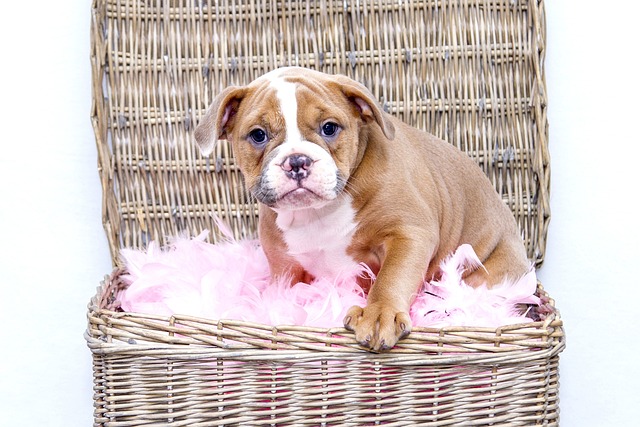
Approach an unfamiliar dog slowly, offering only the backside of your hand for his inspection. He’ll learn your scent and begin to have trust. When a dog recognizes the scent, they won’t fear you and will follow commands.
While training your dog, make sure both of you are having fun. The two of you playing together will help build a strong bond, and that will encourage your dog to positively respond to the training. While training is fun in itself, take some time to just play for enjoyment each day.
The “down” command is something you should teach your dog. This is an excellent foundation to begin your dog’s training, and it’s extremely useful in times of emergency. The “down” command is excellent to use when your dog is exhibiting aggressive behavior.
Your canine training program should incorporate at least a little fun. Keep your training lessons between ten to fifteen minutes so your dog can keep focused. Rewards should be plentiful and varied. You should lavish praises on your dog for following your instructions. If your dog perceives training as fun, he will listen to you more!
Do you have a dog that pulls? Pulling is very common and very easy to cure. You should go to a good pet store and purchase a harness to reduce the pulling and make your daily walks easier.
When you are using your dog’s name negatively while scolding him, be sure to repeat it several times lovingly as well. The animal should not associate his name with something negative as this may lead him to experience fear or anxiety when he hears it.
Consistency is important during your dog training. Make a list of all your commands, and ensure that anyone who might have to control your dog has this list. You also need to make certain that everyone should be rewarding the dog’s good behavior and not rewarding any bad behavior. When the people around the dog use different commands and responses, he may become confused and training could suffer.
When your dog seems untrainable, you may be pulling your hair out. Although, now that you have read this article and obtained this information, you can train your dog to be a great part of the family.