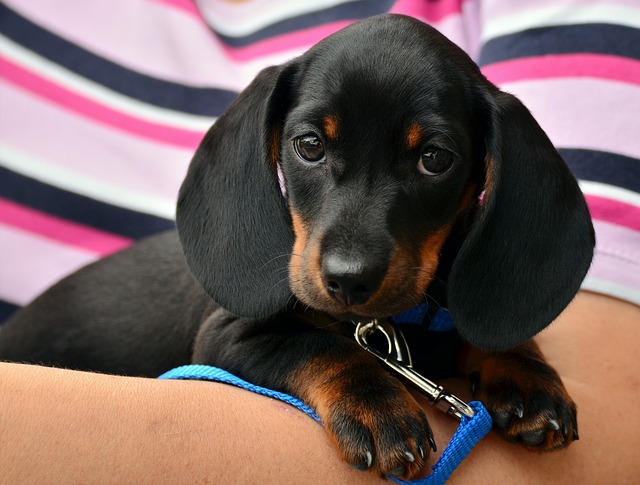
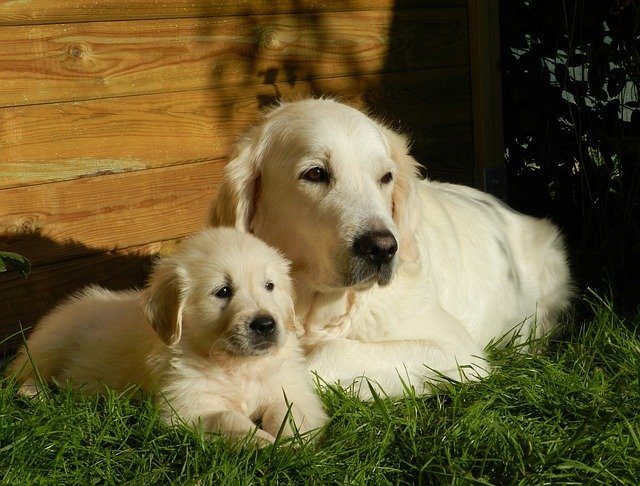
It is not wise to think that your dog has the same intelligence as you, they are dogs and do not possess the ability to think like we do. Treating a dog as if he is able to understand every word you say can be disappointing. Dogs are smart animals, though, and with a little patience and understanding they can be well trained.
Make it clear to your dog that their crate is their home. At meal times, try to place their food in the crate by leaving the door wide open while they’re eating. This will cause them to associate good things, such as eating, with their crate.
There are a few tricks you can try when attempting to crate train a puppy or dog. If they don’t want to go in the crate, try luring them in with a treat or chew bone. Your dog will get excited at the prospect of the treat and soon be eager to enter the crate. After they have entered the crate, be sure to give them praise so they understand that they have done a good thing.
As the dog gets better at training, you can let it have more freedom. The right balance of training, obedience and freedom ensures your dog has an enjoyable life. Make sure you do not provide excessive freedom right away, or backsliding may occur.
You need to show your dog how to properly walk while on a leash. Not only is this safer for the dog and easier on your body, such a frequent activity mandates good self-control and reinforcement of the chain of command from training.
Always make use of positive reinforcement when it comes to training your dog. You can use treats, toys, positive speech and even belly rubs. You should not strike your dog or scream at them. Doing this will cause your dog to act out even more and lose respect for you. Firmness, positivity and consistency are the keys to solid puppy training.
Identify what exactly it is that your dog is always barking at to help curb the behavior. Triggers can include strangers, loud sounds or new places. The key is teaching them that their triggers are nothing to fear.
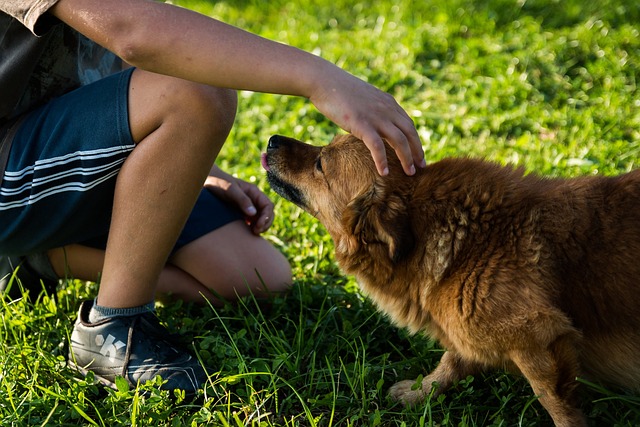
To get your dog to stop barking, train him to obey a command that tell him to stay quiet. When it starts barking, show them the treat and say the command until it quits barking. Then, you are able to reward the dog. When you repeat this action multiple times, your dog will eventually learn that the order means to be quiet.
It is not good for a puppy to train too often, it will wear it out if it has to process too much information. A puppy’s attention span is short and it has a limited amount of energy, so sessions should remain short and positive. If you try to do too much, the puppy will probably not remember much except that it was an unpleasant experience, and that will make it more difficult when the time comes for the next training session.
It is important that you teach your dog proper behaviors from day one. It is much more difficult to break a dog’s bad habits, than to teach it correct behavior in the beginning. If you never give your dog any scraps from table food, they will never start begging for it.
If you use a leash to train your pet, you must ensure that it remains loose rather than taut. This gives your dog the option to explore and walk around freely. Due to their excitement, they will try to pull on their leash. Some owners do not encourage this behavior and instead, allow some slack on the leash.
Remember, each action you perform around your dog affects who he is. You don’t want to undo training you’re worked hard on, so watch what you do at all times. Always be careful not to reward these bad behaviors to prevent your dog from becoming confused.
Don’t give up when you’re training your dog. If you want your dog to behave as trained, it is vital to keep practicing what has already been learned. Keep in mind that in addition to giving your dog food and shelter, training will be a life-long process.
After learning some helpful hints on how to get through to your dog and train it to behave to your expectations you simply need to follow what you have learned. After changing your dogs behavior to fit with the tips suggested you can properly train your dog.